
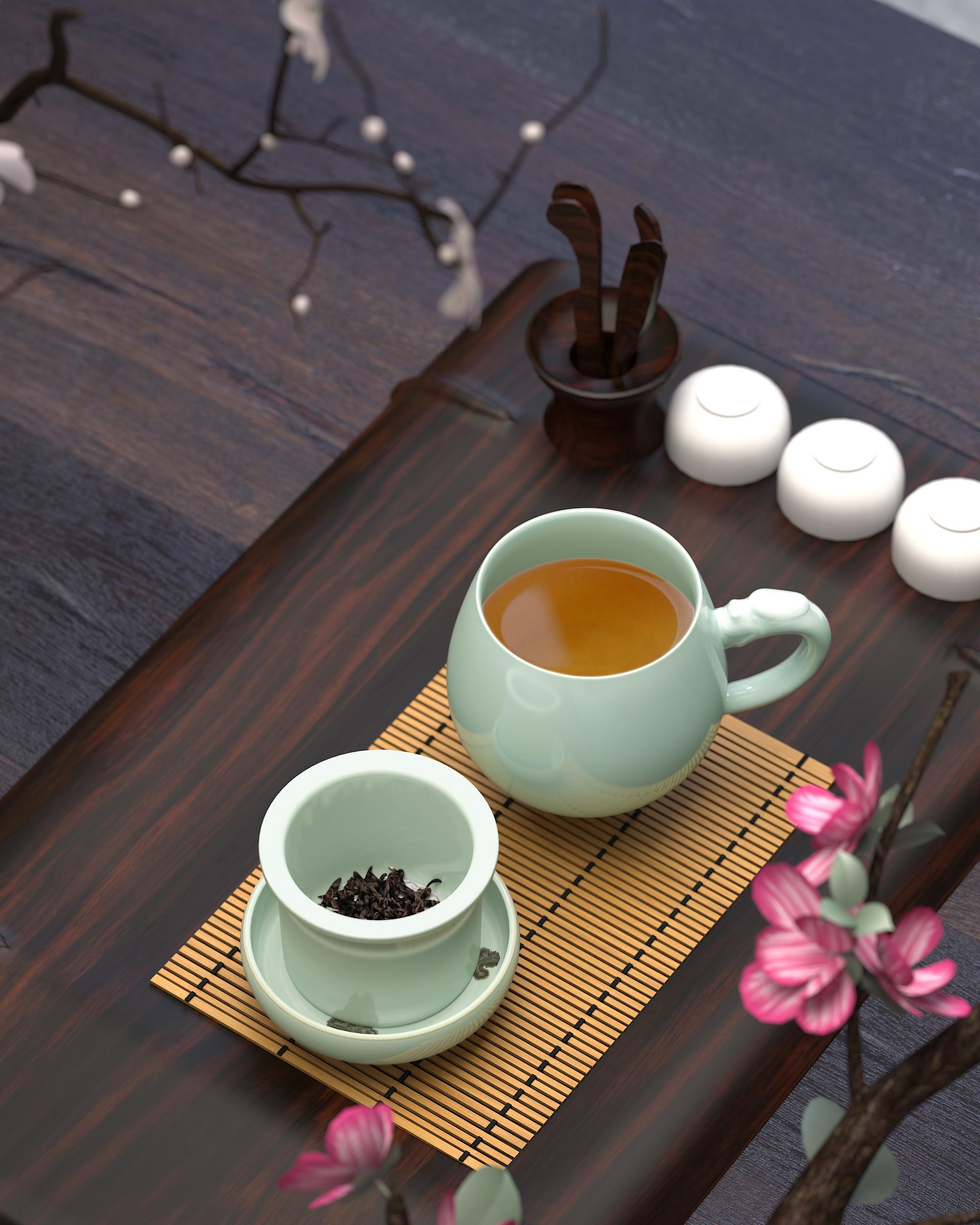
I. Ceramic Tea Ware: The "Classic Mainstream" of Tea Ware
Ceramic tea ware is currently the most widely used and popular type of tea ware. Thanks to its excellent adaptability and affordable price, it has become the top choice for many tea enthusiasts.
1. Raw Materials
It is mainly made from natural clay (such as kaolin and porcelain clay), combined with auxiliary materials like quartz and feldspar. The production process involves multiple steps, including clay kneading, throwing (shaping on a wheel), glazing, and firing. The proportion of raw materials varies slightly among different ceramic tea wares: for example, celadon tea ware uses clay with higher iron content, while white porcelain tea ware adopts higher-purity kaolin.
2. Main Production Areas
- Jingdezhen, Jiangxi Province: Known as the "Porcelain Capital of China," it is the core origin of high-end ceramic tea ware. Famous for white porcelain and blue-and-white porcelain tea ware, its products feature smooth glazes, exquisite designs, and both practical and collectible value.
3. Pros and Cons
- Pros: Safe and non-toxic material, excellent high-temperature resistance, no odor absorption, easy to clean, and effective in preserving the original flavor of tea. It also comes in a wide range of styles, from affordable daily-use models to high-end collectible pieces, making it suitable for various teas such as green tea, black tea, and oolong tea.
- Cons: Some low-end ceramic tea wares may have uneven glazes or be prone to cracking. High-end ceramic tea wares are relatively expensive and have weak impact resistance—they are easy to break if accidentally dropped.
II. Zisha (Purple Clay) Tea Ware: The "Health-Boosting Essential" for Tea Lovers
Zisha tea ware, with its unique material properties, offers good breathability and absorbency, which enhances the taste of tea soup. It is the first choice for Pu'er and oolong tea enthusiasts.
1. Raw Materials
It is made from Zisha clay (purple clay), a material unique to Yixing, Jiangsu Province. Zisha clay is mainly divided into three categories: purple clay, red clay, and green clay. Among them, purple clay has the largest reserves and the most stable texture. Rich in minerals like iron, silicon, and aluminum, Zisha clay forms a porous structure after high-temperature firing, resulting in excellent breathability.
2. Main Production Areas
- Yixing, Jiangsu Province: The only global origin of Zisha clay, it is known as the "Zisha Capital of China." Yixing Zisha tea ware has a long production history and exquisite craftsmanship, with strict standards for every step—from clay selection, billet making, and carving to firing. Well-known Zisha production areas include Dingshu Town and Shushan Subdistrict.
3. Pros and Cons
- Pros: Good breathability allows tea leaves to "breathe fully" during brewing, enhancing the richness of the tea soup. With long-term use, the inner wall of Zisha tea ware absorbs tea stains, creating a "pot nourishing" effect (a process where the pot retains tea flavor over time). When brewing the same type of tea later, the taste becomes more intense. It is a natural and eco-friendly material free of heavy metals, suitable for long-term use, especially for fermented teas like Pu'er, oolong, and dark tea.
- Cons: Relatively high price—handmade Zisha tea ware by famous artisans can cost thousands or even tens of thousands of yuan. Its strong breathability also makes it unsuitable for teas that emphasize freshness (such as green tea and white tea), as it may cause the tea soup to lose its sweet taste. Additionally, Zisha tea ware easily absorbs odors, so frequent switching between different tea types should be avoided to prevent flavor mixing.
III. Glass Tea Ware: The "Transparent Favorite" That Combines Aesthetics and Practicality
With its crystal-clear appearance, glass tea ware allows a clear view of the tea brewing process, making it a new favorite among young tea enthusiasts.
1. Raw Materials
It mainly uses borosilicate glass (also called hard glass), which has high boron and silicon content. After high-temperature firing, it exhibits excellent properties such as high-temperature resistance, low-temperature impact resistance, and high transparency. Some high-end glass tea wares are equipped with natural wood or bamboo handles to improve usability.
2. Main Production Areas
- Zhongshan, Guangdong: As a major domestic production base for glass tea sets, it gathers numerous glass tea set enterprises. It mainly produces mid-to-high-end heat-resistant glass tea sets, with products covering a full range of glass tea sets such as glass tea pots, glass tea cups, and glass tea trays.
3. Advantages and Disadvantages
- Advantages: During brewing, you can clearly see the process of tea leaves unfurling and the color change of the tea soup, which is highly ornamental. The material is safe, free of harmful substances such as lead and cadmium. It does not absorb odors, is easy to clean, and is suitable for all types of tea. It is especially suitable for brewing green tea and white tea, as it can highlight the clear color of the tea soup.
- Disadvantages: It is easy to break if dropped accidentally. Some ordinary glass tea sets have poor heat resistance and may crack when boiling water is poured into them; therefore, you need to choose products marked with "heat-resistant" and "borosilicate glass". After long-term use, scale is easy to form on the glass surface, requiring regular cleaning.
IV. Metal Tea Sets: A "Durable Choice" Combining Tradition and Modernity
Metal tea sets have a long history, ranging from ancient copper tea sets and silver tea sets to modern stainless steel tea sets. With their characteristics of durability and portability, they occupy a certain market share.
1. Raw Materials
- Stainless Steel Tea Sets: Made of food-grade 304 stainless steel or 316 stainless steel. 316 stainless steel has stronger corrosion resistance and is suitable for long-term contact with tea water.
- Silver Tea Sets: Made of pure silver (with a silver content of 99.9%) or fine silver (with a silver content of 99%). Some silver tea sets are mixed with metals such as copper and tin to enhance hardness.
- Copper Tea Sets: Made of pure copper or brass. Brass has a higher zinc content and better corrosion resistance than pure copper.
2. Main Production Areas
- Foshan, Guangdong: It is a core production area for stainless steel tea sets. Foshan has a well-developed stainless steel industry and can provide high-quality food-grade stainless steel raw materials. The stainless steel tea sets produced here come in various styles, covering tea pots, tea cups, tea strainers, etc.
- Lijiang, Yunnan: It mainly focuses on the production of silver tea sets. Lijiang has a long-standing tradition of silverware craftsmanship. The silver tea sets produced here combine practicality and decoration, and some products also incorporate ethnic elements.
- Wenzhou, Zhejiang: The production of copper tea sets is relatively concentrated here. Wenzhou has mature copper processing technology, and the copper tea sets produced here have a smooth surface and are not easy to rust.
3. Advantages and Disadvantages
- Advantages: They have strong durability, and their impact resistance and drop resistance are much better than those of ceramic and glass tea sets, making them suitable for scenarios such as outdoor camping and travel. Stainless steel tea sets are easy to clean and not easy to breed bacteria. Silver tea sets have a certain bactericidal effect and can enhance the sweetness of the tea soup, making them suitable for brewing Pu'er tea and black tea.
- Disadvantages: Stainless steel tea sets have strong thermal conductivity, and their outer walls are easy to get hot when boiling water is poured in, so they need to be matched with heat-insulating handles. Copper tea sets are prone to oxidation and blackening after long-term use and require regular maintenance.