
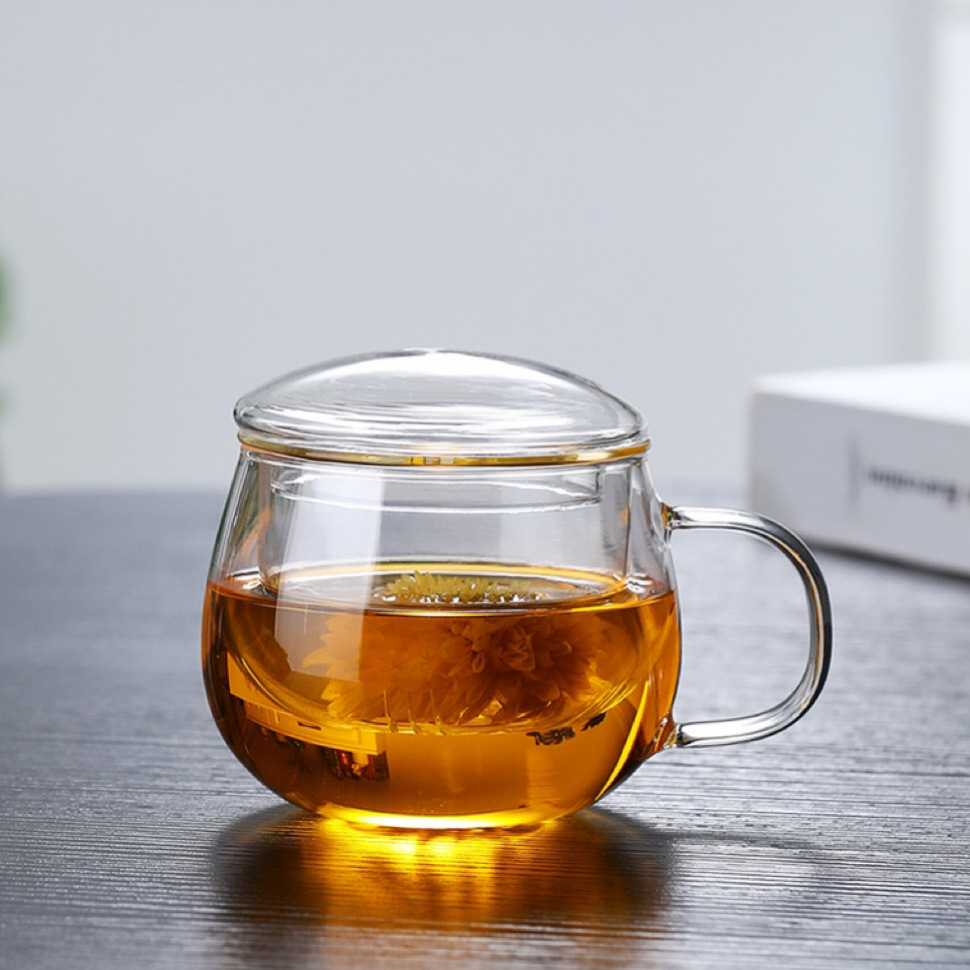
What is borosilicate glass
Have you ever wondered why some glass products can withstand both high temperatures and sudden temperature fluctuations? The secret lies in a special type of glass: borosilicate glass. Borosilicate glass, also known as 3.3 borosilicate glass, is a unique member of the glass family. Its primary components are sodium oxide (Na₂O), boron oxide (B₂O₃), and silicon dioxide (SiO₂). It's called borosilicate glass because of its high boron and silicon content: boron accounts for 12.5% to 13.5% and silicon for 78% to 80%. Compared to ordinary glass, which is primarily composed of silicon dioxide, calcium oxide, and sodium oxide, borosilicate glass possesses many unique properties due to its high borosilicate content. Moreover, borosilicate glass contains very few ferrous ions and is a clear and transparent colorless glass. This characteristic gives it unique advantages in optical applications. For example, it can be used to manufacture microscope lenses, which can provide a clear field of view and help researchers observe the microscopic world more accurately.
Unique performance revealed
(1) Low expansion rate and strong resistance to fracture
One of the most notable properties of borosilicate glass is its extremely low coefficient of thermal expansion, approximately one-third that of ordinary glass. This property gives it exceptional temperature stability. Imagine pouring scalding water into a regular glass on a cold winter day. The sudden temperature change might cause the glass to shatter instantly. This is because ordinary glass experiences significant internal stress due to thermal expansion and contraction during rapid temperature fluctuations, often leading to glass breakage. However, borosilicate glass exhibits a different characteristic. Its low coefficient of thermal expansion significantly reduces the impact of thermal gradient stress, making it more resistant to fracture and easily resistant to such sudden temperature changes, greatly ensuring safety. This characteristic makes borosilicate glass particularly useful in optical instruments, where material stability is paramount. It is an essential material for instruments such as telescopes and reflectors, ensuring that optical equipment maintains precise shape and performance across varying temperatures, providing clear, stable observations.
(2) High temperature resistance and high softening point
Borosilicate glass has excellent high-temperature resistance, with a softening point of 820°C. It can withstand temperature swings of 150°C and maintain its structural integrity even under drastic temperature fluctuations. In industrial production, many chemical reactions require high temperatures, and reaction vessels made of borosilicate glass can meet this requirement. They can withstand temperature fluctuations during high-temperature chemical reactions and will not deform or break due to excessive temperatures, providing a reliable guarantee for the smooth progress of industrial production. In the manufacture of solar water heaters, borosilicate glass is used as the material for the heat collecting tubes. It can withstand long-term exposure to the sun and the high temperature of hot water, effectively converting solar energy into thermal energy to provide people with hot water for daily use, demonstrating excellent high-temperature resistance and practical value.
(3) High strength and high hardness
Borosilicate glass also excels in terms of physical strength and hardness. Its high physical strength and hardness allow it to withstand a certain degree of external impact and friction in both daily use and industrial applications, making it resistant to damage. Common borosilicate glass tableware in daily life is not prone to cracking or scratching during frequent use and cleaning, even in the occasional collision, and is therefore durable. In industrial fields requiring high material strength and hardness, such as certain aerospace components and the casings of high-end equipment, borosilicate glass, with its high strength and hardness, can provide reliable protection for equipment, ensuring its normal operation in complex working environments.
(4) High light transmittance and clear vision
Borosilicate glass boasts high light transmittance, a property that gives it a crucial position in the field of optics. Its high transmittance maximizes light transmission with minimal absorption or scattering. In the manufacture of optical instruments and lenses, the high transmittance of borosilicate glass ensures clear and accurate imaging, minimizing light loss and image distortion. Many of the camera and microscope lenses we use daily are made of borosilicate glass, enabling us to capture clearer images and observe finer structures, providing powerful support for fields such as scientific research and photography.
(5) High chemical stability and corrosion resistance
Borosilicate glass also boasts high chemical stability, withstanding corrosion by highly corrosive media such as acids and alkalis. In chemical production, the storage and transportation of various chemicals is common. Storage containers and pipelines made of borosilicate glass resist corrosion, ensuring the purity and quality of these chemicals while also ensuring safety during the production process. In the medical field, some glass containers used to store medications and reagents also utilize borosilicate glass, which resists chemical reactions with the drugs, ensuring their stability and effectiveness, and safeguarding the smooth operation of medical work.
Differences from ordinary glass
1. The ingredients are very different
Ordinary glass typically refers to soda-lime silicate glass, primarily composed of silicon dioxide, typically at 70% to 75%. It also contains sodium oxide (Na₂O) and calcium oxide (CaO). These ingredients allow ordinary glass to melt and form at relatively low temperatures, facilitating mass production. Common glass such as window glass and ordinary glass bottles are all processed and formed at relatively low temperatures. High-borosilicate glass, on the other hand, primarily consists of silicon dioxide and boron oxide. The boron content is relatively high, reaching 12.5% to 15%, while the silicon content ranges from 78% to 80%. The addition of boron not only lowers the melting point of the glass but also significantly enhances its heat resistance, endowing high-borosilicate glass with unique properties.
(2) The thermal expansion coefficient is significantly different
Borosilicate glass has an extremely low coefficient of thermal expansion of approximately 3.3×10⁻⁶/°C, roughly one-third that of ordinary glass. This property minimizes the degree of expansion and contraction during temperature fluctuations, generating relatively little internal stress. This significantly reduces the impact of thermal gradient stress and enhances its fracture resistance. Ordinary glass has a higher coefficient of thermal expansion. Rapid temperature fluctuations can cause significant expansion and contraction, leading to significant internal stress, which often causes the glass to break. For example, pouring hot water into an ordinary glass cup in the cold of winter can easily cause it to crack. However, borosilicate glass cups withstand these changes with ease, demonstrating far superior stability to ordinary glass in the face of temperature fluctuations.
(3) Tensile strength revealed
In terms of tensile strength, borosilicate glass also outperforms ordinary glass. Due to its high tensile strength, when it breaks under external forces, the cracks are relatively large, breaking into units. Ordinary glass, on the other hand, has a lower tensile strength and tends to break into smaller pieces. In daily life, even if a container made of borosilicate glass is accidentally impacted and breaks, it will not shatter into small fragments like ordinary glass, reducing the risk of injury. This characteristic is of great significance in practical use, providing greater safety for our lives.
(IV) The ability to withstand cold and heat shock is immediately apparent
High borosilicate glass uses boron and silicon materials to replace a large number of harmful heavy metal ion components in ordinary glass. This not only improves the chemical stability of the glass, but also significantly improves its resistance to cold and hot shocks. It can withstand a temperature difference of 150°C. Even if the temperature changes drastically in a short period of time, the glass will not explode. Ordinary glass has poor resistance to cold and hot shocks and can generally only withstand a temperature difference of about 75°C. It is easy to break when the temperature changes suddenly. In winter, if you put an ordinary glass cup outdoors and then pour hot water into it, the cup will most likely explode due to uneven thermal expansion; but high borosilicate glass cups can remain intact even in low temperature environments when adding boiling hot water. In terms of resistance to cold and hot shocks, the advantages of high borosilicate glass are very obvious.
Full analysis of the production process
The production of high borosilicate glass is a delicate and complex process. Every link plays a key role in the quality of the final product. The production process will be introduced in detail below.
(1) Raw material preparation: the beginning of careful blending
Raw material preparation is the first step in borosilicate glass production. The main raw materials include quartz sand, boric acid, aluminum oxide, and magnesium oxide. The quality and ratio of these raw materials directly impact the properties of the glass, so strict quality control is required to ensure their purity and stability. In practice, the various raw materials must first be mixed according to precise proportions. For example, to achieve borosilicate glass with specific properties, the silica content may need to be precisely controlled at 70%-75% and the boron trioxide content at around 10%. The raw materials also undergo processes such as crushing, mixing, and screening to ensure particle size and mixing uniformity. If the quartz sand particles are too large, melting will be difficult and defects such as stones and streaks will form in the glass. If the particles are too fine, the batch will experience delamination, agglomeration, and flying, which will not only disrupt batch uniformity but also adversely affect melting and clarification. Typically, the quartz sand particle size is controlled between 0.10 and 0.50 mm to achieve optimal melting results. To accelerate the melting process of glass, an appropriate amount of fluxing agents, such as fluorite and lithium oxide, are also introduced into the batch materials. Fluorite can reduce the viscosity of glass at high temperatures, improving its thermal adaptability. It can also react with SiO₂ to form SiF₄ gas, accelerating the formation, clarification and homogenization of the glass. Lithium oxide has a strong fluxing effect, effectively reducing the viscosity of glass at high temperatures. Introducing mineral raw materials containing lithium oxide is not only low-cost and effective in fluxing, but also improves the performance of the glass. In borosilicate glass, it can reduce the tendency of phase separation, thereby improving the glass's water resistance.
(2) Melting: Transformation at high temperature
Melting is a critical step in the production of borosilicate glass. The mixed raw materials are placed in a high-temperature furnace for melting, typically a resistance furnace or a gas-fired furnace. The melting temperature can reach over 1500°C, and in some cases, even as high as 1600°C. During this process, the raw materials gradually melt, forming a uniform molten glass. Due to the complex composition of borosilicate glass, melting is challenging, requiring strict temperature and time control to ensure uniform composition, minimize bubbles, and minimize impurities. To remove bubbles from the molten glass, fining agents such as sulfates or cerium dioxide are often added. These substances decompose at high temperatures, producing gases that encourage the growth and expulsion of small bubbles. During the melting process, factors such as the chemical composition of the batch, the particle size of the raw materials, the uniformity of the batch, the moisture content, the gas content, and the use of cullet all influence the melting effect. The chemical composition of the batch material has a decisive influence on the speed of the glass melting process. The larger the T value, the more difficult the glass is to dissolve and the higher the required melting temperature. The particle size of the raw materials also has a great influence on melting. All raw materials must have strict particle size requirements. The uniformity of the batch material has a direct impact on the quality of the molten glass. Accurate weighing, uniform mixing, and avoiding stratification, flying, and agglomeration during transportation and storage can ensure the uniformity of the batch material. The batch material is required to have a certain wettability, which is conducive to the uniformity of the batch material, promotes the melting of the glass and extends the service life of the kiln, but too much water will cause a lot of heat loss and is not conducive to melting, so it must be strictly controlled. The process requires the batch material to have a certain gas rate. The gas has a stirring effect on the glass liquid, which can promote the formation of silicates and uniform glass melting. Introducing a certain amount of cullet into the batch material can promote melting, but the dosage must be stable and the particle size must be uniform.
(3) Molding: giving the glass a shape
Molding is the process of transforming molten glass into a glass product with a specific shape. Borosilicate glass is typically molded using either the melting or rolling method. The melting method involves pouring the molten glass into a prefabricated mold and allowing it to solidify and form via cooling. This method is suitable for producing glass products with more complex shapes, such as glass tableware and glass crafts. The rolling method involves squeezing the molten glass through a roller press and is commonly used to produce large-area glass products such as flat glass. During the molding process, factors such as the thickness, shape, and surface quality of the glass must be considered to meet varying process requirements. Improper temperature control during the molding process can lead to deformation and uneven thickness in the glass product. For high-precision glass products, such as optical lenses, extremely high dimensional accuracy and surface flatness are crucial after molding, necessitating the use of high-precision molding equipment and processes to ensure product quality.
(IV) Processing: meticulously crafted to produce high-quality products
Processing is the further treatment of formed glass products to enhance their performance and aesthetics. Common processing techniques include polishing, grinding, and coating. Polishing removes blemishes and scratches from the glass surface, making it smoother and improving its light transmittance and gloss. It is often used in the production of optical instruments and high-end glass ornaments. Grinding can change the shape and size of glass to better meet application requirements. Coating forms a special thin film on the glass surface, imparting special properties such as UV protection, heat insulation, and anti-fog. Architectural glass is often coated with a low-emissivity coating to reduce heat transfer between indoor and outdoor spaces, thereby reducing energy consumption. These processing techniques can further enhance the optical performance and surface quality of glass products to meet the needs of various industries.
Wide range of applications
(1) Home life: a combination of safety and beauty
Borosilicate glass is ubiquitous in our daily lives, adding convenience and beauty to our lives. The kitchen is a key application for borosilicate glass. Many high-temperature resistant glassware, such as oven-safe glass bakeware and microwave-safe glass lunch boxes, are made of borosilicate glass. These tableware not only withstands the temperature fluctuations associated with high-temperature cooking but also clearly displays the cooking process, making cooking more enjoyable and reassuring. Borosilicate glass drinking glasses are also popular. They easily handle hot water, providing a safe and reliable drinking container even in the coldest winters without the risk of breakage from sudden temperature changes. In the bathroom, borosilicate glass is often used in mirrors and shower doors. Its high strength and corrosion resistance ensure long-term use and resistance to damage, while also providing clear images and excellent visual quality. Borosilicate glass is also used in lampshades. Its high light transmittance allows light to be distributed softly and evenly, creating a warm and comfortable home atmosphere.
(2) Optical field: ensuring a clear vision
Borosilicate glass plays a vital role in the field of optics and is an ideal material for manufacturing various optical instruments and lenses. Due to its low expansion rate and high light transmittance, it can maintain stable optical properties in varying temperature environments, providing us with a clear and stable field of vision. In optical instruments such as telescopes, microscopes, and camera lenses, borosilicate glass lenses can reduce the scattering and refraction of light, improving image clarity and resolution, and helping us observe more distant and subtle objects. In high-end photography, lenses made from borosilicate glass can capture more delicate image details, providing photographers with a powerful creative tool. In the medical field, borosilicate glass is also used to make optical equipment such as endoscopes. These devices need to pass through narrow passages in the human body, placing extremely high demands on the glass's flexibility and optical properties. With its unique properties, borosilicate glass can meet this demand, helping doctors diagnose conditions more accurately.
(3) Chemical industry: corrosion-resistant containers are the first choice
In the chemical industry, borosilicate glass, due to its exceptional chemical stability and high-temperature resistance, is an ideal container material for storing and transporting various chemicals. Many chemical reagents are highly corrosive, easily corroding ordinary glass. However, borosilicate glass can withstand the erosion of highly corrosive media such as acids and alkalis, ensuring the purity and quality of chemicals. In laboratories, we often see laboratory instruments such as flasks, test tubes, and volumetric flasks made of borosilicate glass. These instruments maintain stability throughout various chemical experiments, providing reliable experimental tools for researchers. In chemical production lines, borosilicate glass piping is used to transport various chemical raw materials and products. Its corrosion resistance ensures long-term stable operation and reduces maintenance costs. In the pharmaceutical industry, borosilicate glass is also widely used in the packaging and storage of pharmaceuticals. It does not chemically react with the drugs, effectively ensuring their stability and effectiveness.
(IV) Nuclear Industry: Key Materials for Radiation Protection
The nuclear industry places extremely high demands on material performance. Borosilicate glass, due to its high radiation resistance, has become one of the most important materials in the nuclear industry. In nuclear reactors, borosilicate glass is used to make glass windows, radiation shields, and other components, effectively blocking radiation and protecting workers and the surrounding environment. Borosilicate glass also plays a key role in nuclear waste disposal. Nuclear waste contains large amounts of radioactive substances that require safe handling and storage. Borosilicate glass can be made by mixing nuclear waste with glass raw materials, melting them at high temperatures, and evenly dispersing the nuclear waste in the glass matrix to form a stable solidified body. This effectively fixes the radioactive substances within the glass and reduces their release into the external environment. This solidification method not only ensures the safety of nuclear waste during transportation and storage, but also reduces potential harm to the environment.
(V) Electronics Industry: Important Support for Precision Devices
In the electronics industry, borosilicate glass is widely used in the manufacture of electronic devices and semiconductor materials due to its excellent insulation properties, radiation resistance, and chemical stability. In the integrated circuit manufacturing process, borosilicate glass can be used as a substrate material for photolithography masks. Its high-precision dimensional stability and surface flatness meet the requirements of the photolithography process, ensuring the accuracy and quality of chip manufacturing. In the field of electronic packaging, borosilicate glass is also used to make packaging shells for electronic components. It can protect the internal electronic components from external environmental influences and improve the reliability and stability of electronic equipment. In some specialized electronic equipment, such as aerospace and military equipment, borosilicate glass has become an indispensable material due to its ability to withstand extreme temperatures and radiation environments.
borosilicate tea set
For tea lovers, the choice of teaware is crucial. The use of borosilicate glass in teaware adds a unique flavor to tea tasting. Thanks to its outstanding performance, borosilicate glass teaware has become a favorite among tea lovers. Its safe and healthy material, primarily composed of natural minerals, is manufactured without the addition of any harmful substances, meeting international food safety standards. It contains no heavy metals like lead, avoiding the potential risks associated with traditional ceramic or crystal glass, allowing us to brew and enjoy tea with confidence.
Borosilicate glass tea sets offer excellent insulation. Although glass itself conducts heat quickly, special treatment allows them to effectively maintain the temperature of tea. This makes them an ideal solution for both long-term heat preservation in cold winters and quick cooling in scorching summers. In the summer heat, when brewing cold tea in borosilicate glass, the crisp sound produced by pouring ice cubes into the cup is a result of its excellent thermal conductivity. Its high transparency is also a highlight, allowing users to clearly see the tea leaves unfolding in the water, a visual experience that undoubtedly enhances the enjoyment of tea drinking. This transparency also helps to determine the color of the tea, allowing for better brewing timing. Borosilicate glass tea sets are also extremely durable. Compared to other types of glass, they are more sturdy and durable, with a low coefficient of expansion, making them stable under extreme temperature fluctuations and resistant to cracking. Even with daily use, they are not easily damaged by accidental drops.
There's a wide variety of borosilicate glass tea sets available on the market. These include simple and stylish teapots with streamlined designs, smooth spouts, and a removable strainer for conveniently filtering tea dregs. Perfect for sharing tea at home or entertaining guests, these teapots offer exquisite, compact designs with a transparent body and a comfortable grip, allowing you to focus on savoring the tea. Finally, there are beautiful and practical teapots with a large capacity for storing excess tea. The borosilicate glass material clearly displays the tea's color, adding a touch of elegance to the tea table. Choosing borosilicate glass tea sets can be tailored to your tea drinking habits and aesthetic preferences. Solo tea lovers can opt for compact single-cup sets, while those who frequently drink with friends can opt for sets with larger teapots and multiple cups. Pay close attention to the quality of your tea set, inspecting the glass for imperfections like bubbles and cracks to ensure you're purchasing high-quality products.