Gaiwan vs Yixing Teapot: 5 Differences to Pick the Right One
When you start taking tea seriously, the first decision is often not which tea to buy, but which vessel to brew it in. Beginners repeatedly ask: what's the difference between a gaiwan and a Yixing teapot, and which should I buy? Short answer—the gaiwan is versatile, aroma-true and easy to control; the Yixing pot locks aroma, brews mellow and can be "raised" over years. Both are staples of Chinese gongfu tea, but they serve different teas and different moods. Below, five dimensions help you choose by tea type and personal preference.
1. Material: Porcelain vs Zisha Clay
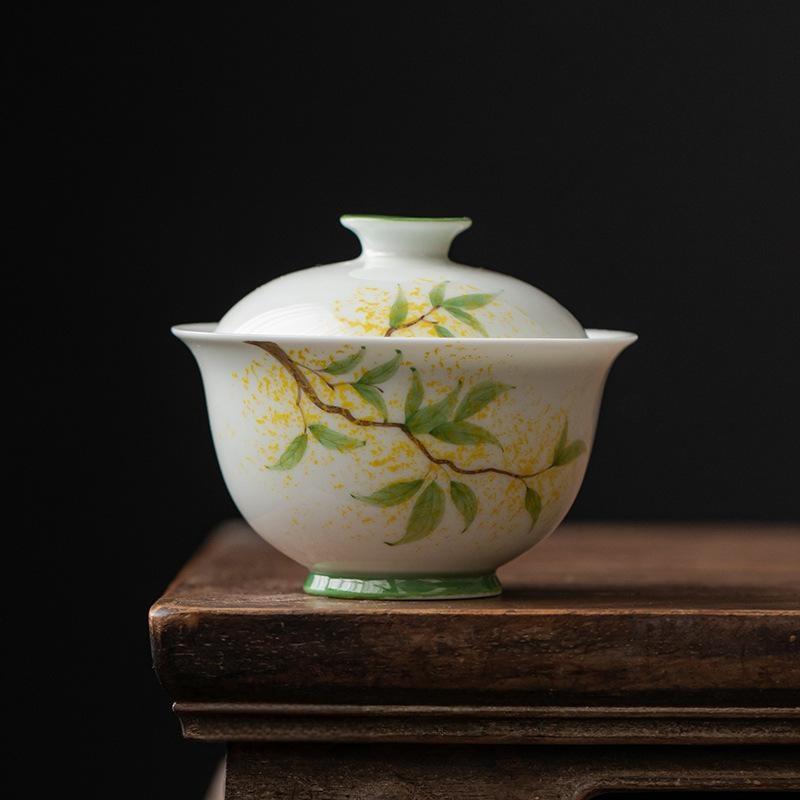
A gaiwan is usually white porcelain, blue-and-white or glass. The "three talents" set pairs a lid, bowl and saucer, representing heaven, earth and humanity. Porcelain is non-porous and neutral, so it adds no flavor—the tea tastes exactly as the leaves are. A Yixing teapot is made from Jiangsu zisha clay with a unique dual-pore structure: breathable yet non-leaking. With use it builds a warm, glossy patina no gaiwan can match. Many tea lovers keep a Yixing for years, watching the clay darken and shine. The gaiwan shows truth; Yixing shows character. For tasting sessions or comparing several teas in one afternoon, porcelain is the professional's choice.
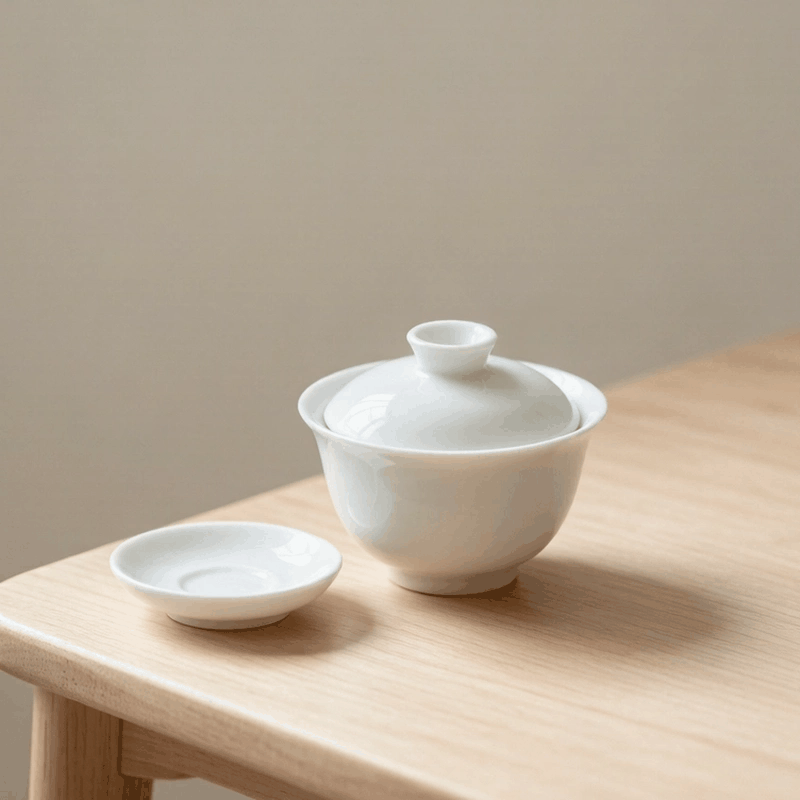 white porcelain Jingdezhen gaiwan for brewing green tea
2. Brewing: Fast Control vs Locked Aroma
With a gaiwan you lift the lid to smell the leaves, pour cleanly and rinse the bowl in seconds—gongfu brewing is all in the wrist. The open shape lets you inspect the wet leaves and adjust steep time on the fly. This speed also makes the gaiwan ideal for tea tastings where you sample many teas back to back. A Yixing pot locks aroma and pours soft and long, rewarding a slow ritual of warming the pot, awakening the leaves and raising the clay. You don't rush it; you live with it.
3. Best Teas: Universal vs Heavy
Green, yellow and light-aroma teas → gaiwan, because it cools fast and never stews tender buds. Pu-erh, black, dark and aged white teas → Yixing, which holds heat and brews round and sweet. Oolong and rock teas suit both: the gaiwan highlights fragrance layers, the Yixing deepens body. Scented flowers prefer the gaiwan; porous Yixing absorbs stray scents, so jasmine and osmanthus should stay away.
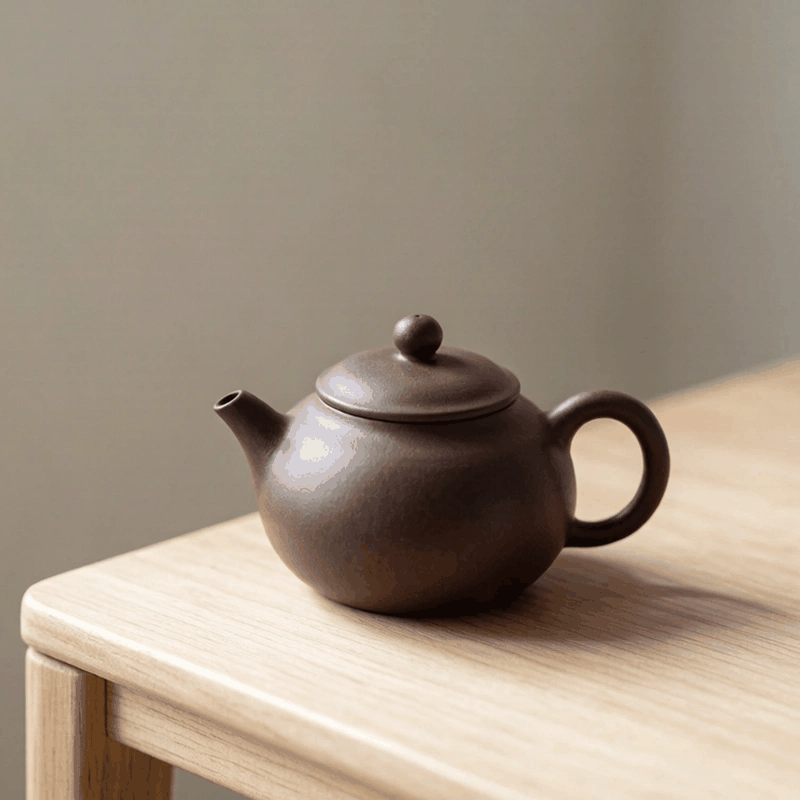 authentic Yixing purple clay teapot for brewing pu-erh tea
4. Heat Retention: Quick-Cooling vs Trapped
The gaiwan's wide mouth sheds heat fast, protecting delicate buds from overcooking. The Yixing's thick walls trap temperature, ideal for the high, sustained heat that pu-erh and aged teas demand. This single difference explains why green tea tastes grassy in a gaiwan but flat in a Yixing, while old sheng pu-erh sings in clay. High heat activates the complex aromatics of aged leaves, while too much heat quickly ruins fresh green tea.
5. Feel: Hot Hands vs Warm Grip
The gaiwan is light, cheap and easy to clean; beginners avoid scalds with a three-finger saucer grip and a small gap on pour. The Yixing sits warm in the hand with a long, soft stream, but it needs seasoning to purge earthiness and daily care afterward. It asks for a relationship, not just a rinse. Many beginners end up buying both within their first year once they know which teas they actually reach for daily.
How to Choose
Drink green, white or aroma-forward oolong → gaiwan. Drink pu-erh, black or aged tea → Yixing. Drink both → own one of each. Learn fundamentals on a gaiwan; collect and raise a Yixing if you love the ritual. If you mainly serve guests quickly, the gaiwan's speed wins. If you slow down alone, the Yixing rewards patience.
Still unsure? Start with the tea you drink most often. If your shelf is full of green and white tea, a gaiwan will serve you better than any teapot. If you reach for pu-erh every afternoon, a Yixing pot will reward that habit with deeper, rounder brews.