
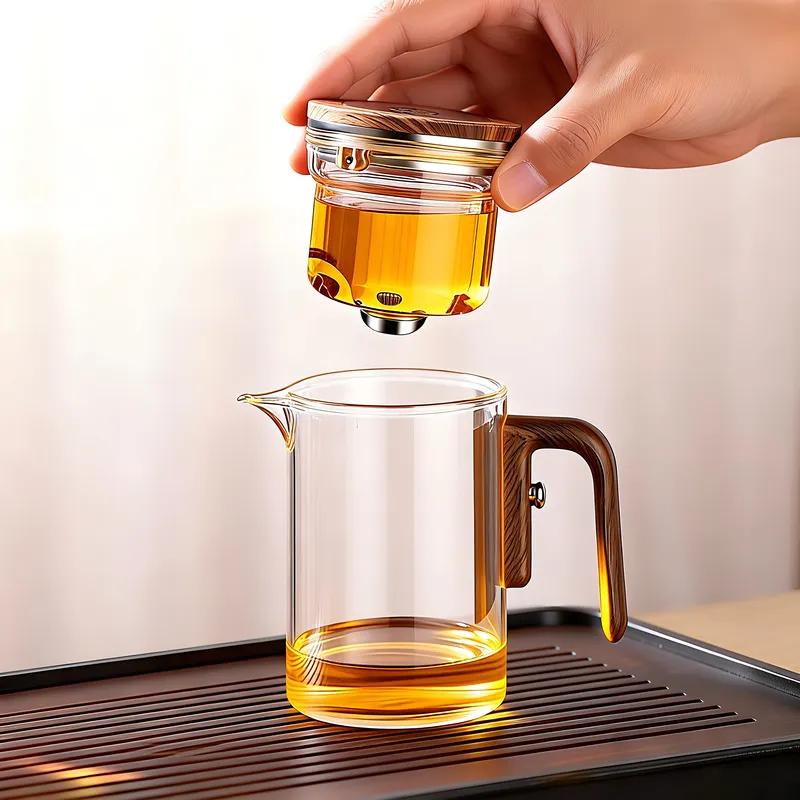
Can You Replace Water with Tea in Summer?
Every summer brings the gentle reminder: “drink more water.” Water is the source of life, and adequate daily hydration matters. For lifelong tea drinkers, most daily fluids come from tea. Yet many experts say “tea cannot replace water — you must drink plain water on top of it,” arguing that tea’s diuretic effect drains the body. If you dislike bland plain water and love tea, you may wonder: really can’t tea stand in for plain water? Let’s skip the mysticism and look at the science.
1. Adequate Hydration: An Underestimated Lifeline
People are poor at sensing “thirst” — by the time you feel thirsty, the body is already mildly dehydrated. Summer especially demands enough fluids, for three reasons:
- The medium of metabolism: Water is the solvent for every biochemical reaction. Fat burning and nutrient transport grind to a halt without it.
- The key to cooling: In summer we cool down by sweating; evaporating sweat carries heat away. Without timely rehydration, temperature regulation fails and heat stroke looms.
- Lubricant for the brain: About 75% of the brain is water. Studies show a 2% water loss already lowers cognition, triggers headaches and fatigue.
Conclusion: Adults should secure roughly 2000 ml and teens roughly 1500 ml a day in summer — the baseline for survival.
2. Can Tea Replace Water? The Science Says Yes (with nuance)
Experts say “tea can’t replace water, you must drink plain water separately,” citing that “tea is diuretic and drains water.” From a modern scientific view, that claim is too absolute.
1. The one-sided “diuretic” argument
Tea is indeed mildly diuretic (caffeine increases renal blood flow), but the argument has a logical gap: the main thing you ingest with tea is still water. Although urine output rises after drinking tea, most of the water stays in the body.
For example: if you drink 2000 ml of tea and diuresis sheds about 500 ml, you still net-retain about 1500 ml, and breakfast milk and vegetables add more — easily meeting the body’s needs.
Conclusion: As long as total tea intake is sufficient, tea absolutely hydrates.
2. Is drinking enough tea a problem?
Research from Academician Liu Zhonghua’s team shows that for most healthy people, ordinary daily tea consumption rarely approaches the safe upper limit. That means most people can increase tea intake — gaining tea’s health value while replenishing fluids. In other words, if you drink tea normally rather than treating leaves as food, “caffeine excess” or “toxicity” simply does not exist.
3. Replacing Water with Tea Works — If You Do It Right
Drinking tea to hydrate is fine, but drinking it carelessly harms you. Follow two rules to stay healthy and alert.
✅ Rule 1: Choose the right “tea”
Drinking several cups of green tea every day eventually troubles the body. Gentle teas suit summer better and can be drunk liberally. Recommended rotation: aged white, aged raw (sheng) pu-erh, oolong, black tea, ripe (shou) pu-erh — 2 to 3 kinds a day. Balanced in nature, they’re safe in volume, and variety benefits the body more.
A practical summer schedule:
- Morning: aged white or aged raw pu-erh — wakes you up; rich in flavonoids, a natural anti-inflammatory that relieves that heavy-body feeling.
- Noon: black or oolong tea; when you have time, make a lemon black tea or cold-brew oolong for a cooling, appetizing lift.
- After dinner: ripe pu-erh — aids digestion of meats, won’t disturb sleep; rich in theabrownins and prebiotics (tea polysaccharides, water-soluble pectin) that pamper the gut and rebalance its flora.
✅ Rule 2: Control strength, drink more cups
Use about 5 g of leaf per cup, brew 3 to 4 times across the day, and reach a total tea volume of 2000 ml.
Frequently Asked Questions
Does tea actually make you thirstier or dehydrate you through diuresis?
No. Tea does contain caffeine, which has a mild diuretic effect, but the main thing you consume is still water. With normal intake, what goes in exceeds what comes out, so your body retains a net positive amount and you do not become dehydrated.
How much tea replaces water in a day?
Aim for a total tea volume of about 2000 ml for adults and about 1500 ml for teens — roughly 5 g of leaf per cup, brewed 3 to 4 times across the day.
Which teas are best for replacing water in summer?
Favor gentle teas: aged white, aged raw pu-erh, oolong, black tea, and ripe pu-erh, rotated 2 to 3 kinds a day. Strong green, fresh white, and fresh raw pu-erh are fine but limited to one or two cups.
With adequate tea intake, can caffeine be excessive?
Research by Academician Liu Zhonghua's team shows most people's daily tea consumption rarely approaches the safe upper limit. Normal tea drinking does not cause caffeine excess or toxicity, though very strong tea in large amounts over long periods should be avoided.
Why must we drink more water than usual in summer?
Summer sweating drives heat loss through evaporation; water also powers fat burning and nutrient transport, and about 75% of the brain is water — a 2% loss already impairs cognition. Adults should target roughly 2000 ml as a baseline in summer.
Drinking enough water in summer is a task your body sets for you — try to complete it. If you dislike tasteless plain water, go ahead and enjoy your tea with confidence: adequate tea drinking satisfies your body’s thirst and fully delivers tea’s health value. May your cup always be full this summer. How much water do you usually drink a day? Feel free to share your tea habit in the comments.